Protect your building from costly water damage with proper waterproofing. Discover essential waterproofing practices for bathrooms and terrace slabs, common causes of leakage, and quality checks that improve durability. Learn why prevention during construction is better than repairs later. Build stronger and protect better with Manovsis.
A Strong Building Begins with a Waterproof Foundation of Protection
Water is essential to every building, but when it enters the wrong places, it can become one of the biggest threats to a structure.
From bathroom floors to exposed terrace slabs, constant exposure to moisture, rainwater, and water seepage can lead to dampness, peeling paint, damaged interiors, and costly repairs.
Waterproofing is not just an additional construction activity — it is an essential investment in the durability, safety, and longevity of your building.
At Manovsis Reality India Pvt. Ltd., we believe that a well-constructed building is one that is protected from the inside out.
1. Why Is Waterproofing Important for Buildings?
Waterproofing creates a protective barrier that prevents water from penetrating concrete and other building materials.
Without proper waterproofing, even a well-designed building can develop problems such as:
Water seepage through walls and ceilings
Damp patches and peeling paint
Fungal and mould growth
Corrosion of reinforcement steel
Damage to flooring and interior finishes
Reduced durability of concrete
Expensive maintenance and repair costs
The most effective way to prevent these problems is to incorporate waterproofing during the construction stage rather than waiting for leakage to appear.
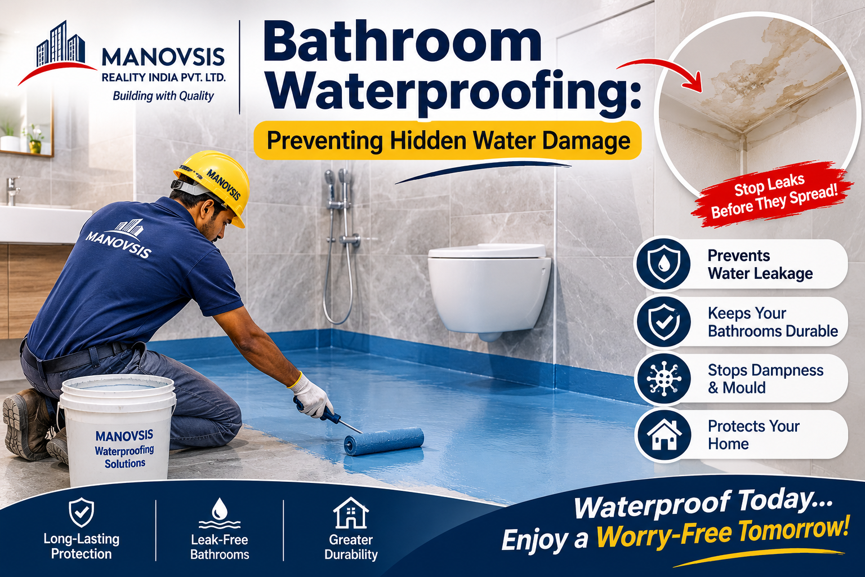
2. Bathroom Waterproofing: Preventing Hidden Water Damage
Bathrooms are among the most water-intensive areas in any building. Continuous exposure to water from showers, washbasins, and floor cleaning makes waterproofing essential.
Even small cracks or poorly sealed pipe connections can allow water to seep through the floor slab and affect the ceiling of the floor below.
Common Bathroom Waterproofing Problems
Leakage around floor traps and drainage pipes
Water seepage through tile joints
Improper waterproofing at wall-floor junctions
Cracks in the bathroom floor slab
Poor sealing around plumbing fixtures
Insufficient slope towards floor drains
Best Practices for Bathroom Waterproofing
1. Prepare the surface properly
The concrete surface should be clean, sound, and free from dust, loose particles, and contaminants before waterproofing begins.
2. Apply a suitable waterproofing system
Use a compatible waterproofing membrane or coating suitable for wet areas, following the manufacturer's specifications.
3. Treat critical junctions carefully
Special attention must be given to floor-wall corners, pipe penetrations, floor traps, and other vulnerable areas.
4. Ensure proper drainage slope
The bathroom floor should have an appropriate slope towards the floor trap to prevent water stagnation.
5. Conduct a ponding test
After the waterproofing system has cured, conduct a water ponding test for the specified duration to identify any leakage before laying tiles.
6. Protect the waterproofing layer
The waterproofing membrane should be protected from damage during subsequent tiling and finishing activities.
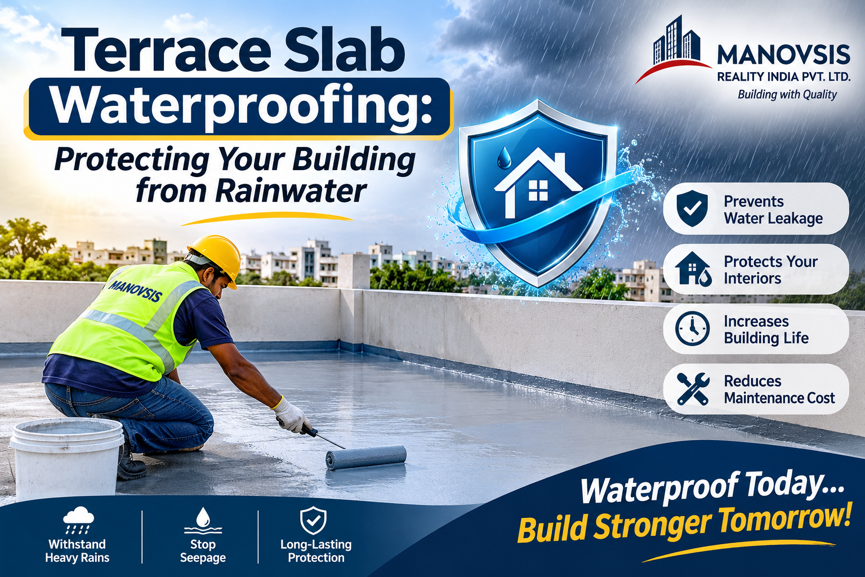
3. Terrace Slab Waterproofing: Protecting Your Building from Rainwater
Terrace slabs are continuously exposed to harsh weather conditions, including heavy rainfall, sunlight, and temperature fluctuations.
Over time, these conditions can cause cracks, deterioration, and water penetration if the terrace is not properly waterproofed.
A leaking terrace can affect multiple floors, damage interiors, and compromise the durability of the building.
Common Terrace Waterproofing Problems
Water stagnation due to improper slope
Cracks in the concrete slab
Leakage through construction joints
Damaged or deteriorated waterproofing membranes
Improper treatment around parapet walls
Leakage through rainwater outlets
Poor maintenance of terrace drainage systems
Best Practices for Terrace Waterproofing
1. Ensure proper surface preparation
The terrace surface must be cleaned and repaired before applying the waterproofing system.
2. Provide adequate slope
The terrace should have a suitable slope towards rainwater outlets to prevent water stagnation.
3. Select the right waterproofing system
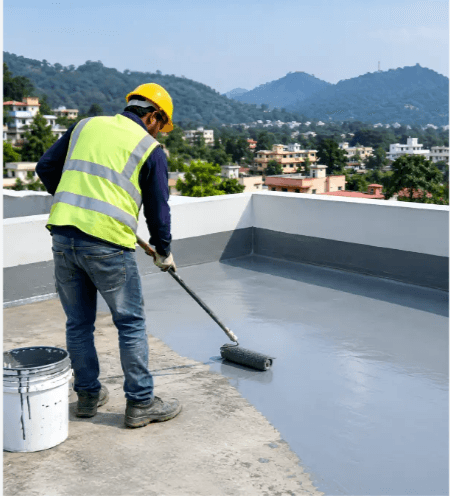
Depending on the project requirements, suitable systems may include liquid-applied membranes, cementitious waterproofing, bituminous membranes, or other approved systems.
4. Treat joints and cracks
Construction joints, expansion joints, cracks, and parapet-wall junctions require appropriate detailing and treatment.
5. Protect the waterproofing membrane
Where required, provide suitable protective screed or another protection system to prevent damage from weather, foot traffic, and subsequent construction activities.
6. Test before final finishing
Conduct the specified waterproofing inspection and water test before completing the final terrace finish.
4. Waterproofing During Construction vs. Waterproofing After Leakage
One of the biggest mistakes in construction is treating waterproofing as a repair activity rather than a preventive measure.
Waterproofing during construction | Waterproofing after leakage |
Planned and systematic | Often urgent and reactive |
Easier access to critical areas | Difficult access to concealed areas |
Protects finishes before installation | May require removal of tiles or finishes |
Helps reduce future maintenance | Can involve repeated repair costs |
Improves long-term durability | Damage may already have occurred |
The best time to waterproof a building is before water finds its way in.
5. Quality Checks Every Site Engineer Should Follow
Waterproofing quality depends not only on the material used but also on proper execution and supervision.
Important site checks include:
Verify the waterproofing material and manufacturer's specifications.
Ensure proper surface preparation.
Check the application thickness and number of coats.
Inspect corners, joints, and pipe penetrations.
Confirm the required curing or drying time.
Check terrace and bathroom drainage slopes.
Conduct water testing before covering the waterproofing layer.
Maintain proper inspection and test records.
Following these checks helps ensure that waterproofing is completed systematically and reduces the risk of future leakage.
6. Build Stronger. Protect Better. Choose Manovsis.
At Manovsis Reality India Pvt. Ltd., we understand that the true quality of a building is measured not only by its appearance but also by its ability to withstand time, weather, and everyday use.
Proper waterproofing is a critical part of delivering durable, reliable, and long-lasting construction.
Whether it is a bathroom, terrace slab, or another moisture-prone area, the right waterproofing solution can help protect your property and reduce unnecessary maintenance costs.
Don't Wait for Leakage to Damage Your Building.
Protect your investment with the right waterproofing solutions from the beginning.
Choose Manovsis Reality India Pvt. Ltd. for construction solutions that focus on quality, durability, and long-term performance.
Manovsis — Building with quality. Protecting for generations.